AM2PM presented at TUM GNI Symposium 2026
AM2PM research exploring how large language models can interact with federated Digital Twin systems was presented at the TUM GNI International Symposium 2026 in Munich.
From 18–20 May 2026, the TUM GNI International Symposium 2026 – Artificial Intelligence for the Built World took place at the Oskar von Miller Forum in Munich. The symposium brought together researchers and practitioners exploring how artificial intelligence and digital technologies can support the built environment, with topics ranging from Digital Twins and semantic systems to robotics and additive manufacturing.
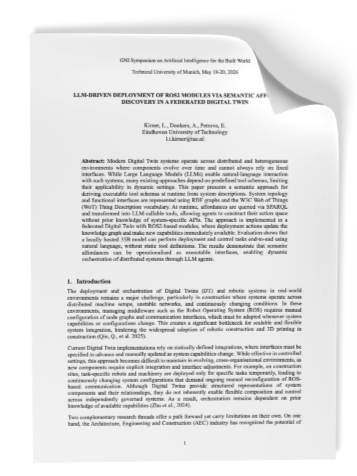
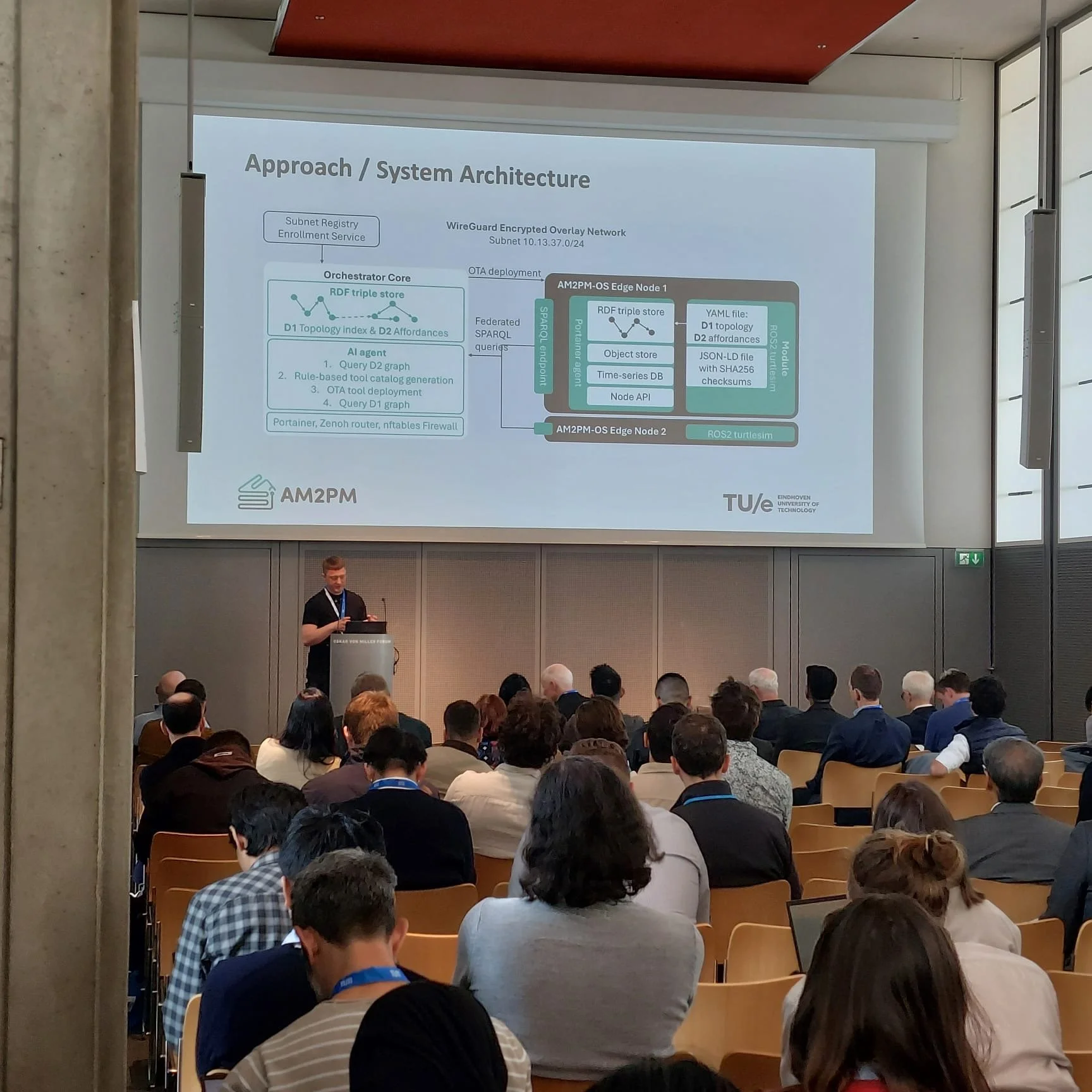
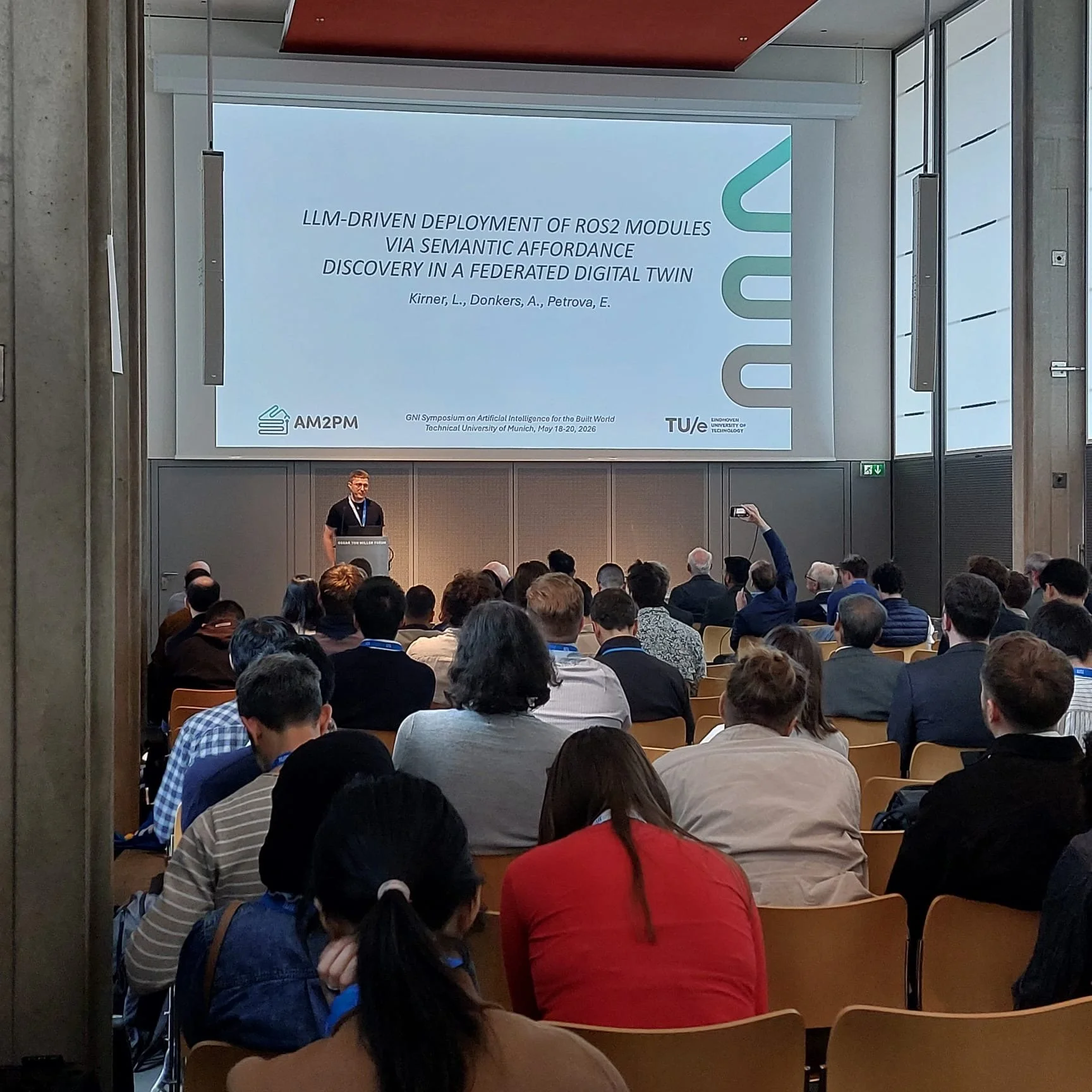
AM2PM was represented at the symposium by researchers from Eindhoven University of Technology. Lukas Kirner presented the contribution “LLM-Driven Deployment of ROS2 Modules via Semantic Affordance Discovery in a Federated Digital Twin”, co-authored with Alex Donkers and Ekaterina Petrova.
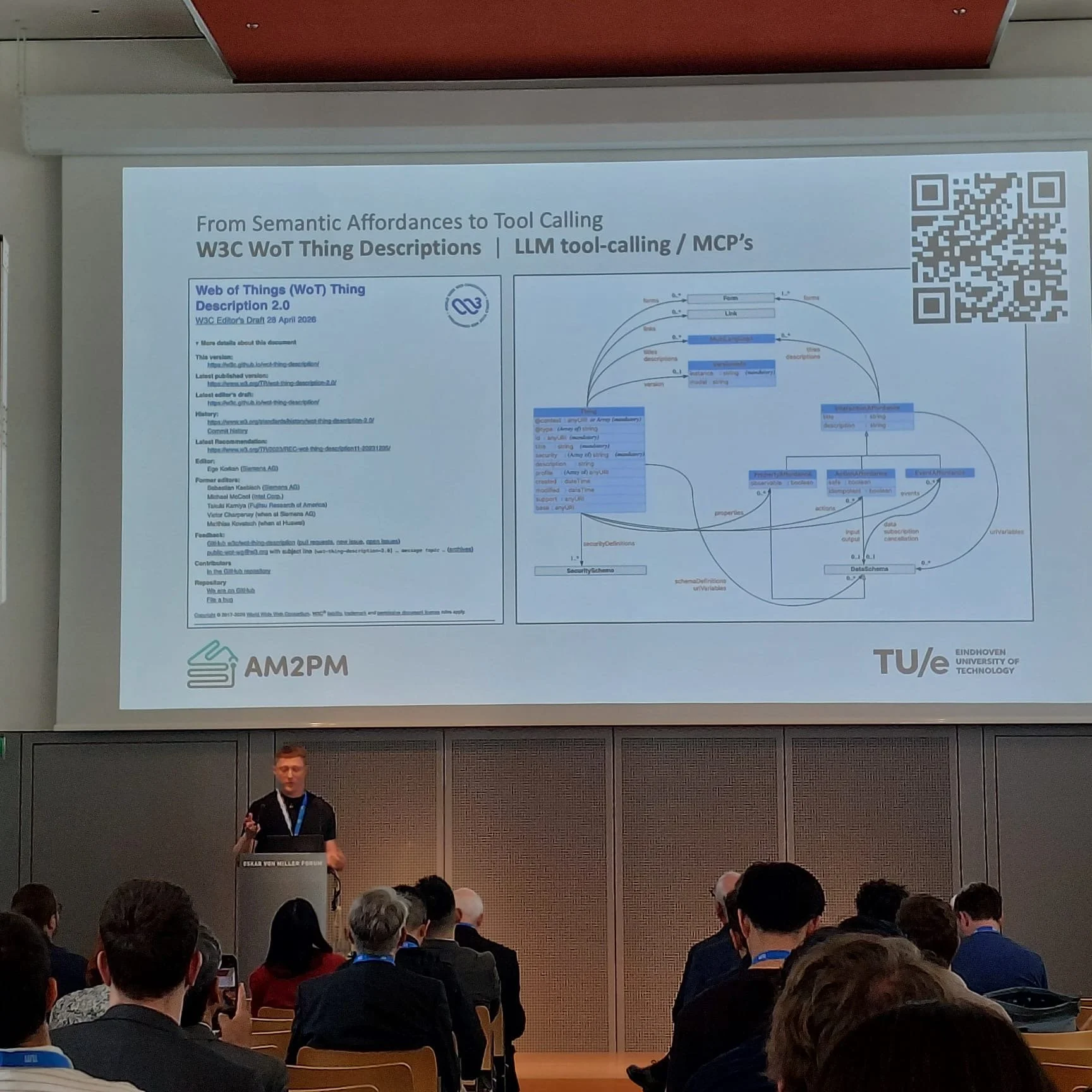
The work was also published as a peer-reviewed conference contribution in the Proceedings of the TUM GNI Symposium on AI for the Built World. It addresses an important challenge in federated Digital Twin systems: available tools and capabilities can evolve over time. To make such systems more adaptable, the team explored semantic affordances – machine-readable descriptions that allow AI agents to discover and use system functions at runtime.
The approach was tested using ROS2-based modules, showing that a locally hosted large language model could complete a multi-step deployment workflow from natural-language instructions while identifying the capabilities required during execution.
The work contributes to AM2PM’s research on AI-enabled, networked and automated construction. Presenting it at the TUM GNI Symposium provided an opportunity to share AM2PM developments with the wider AI and built environment research community and contribute to discussions on the role of intelligent, connected digital systems in future automated construction.