

CONCEPT
AM2PM tackles these challenges head-on, offering a unified framework that brings intelligence, efficiency, and sustainability to 3D concrete printing at scale.
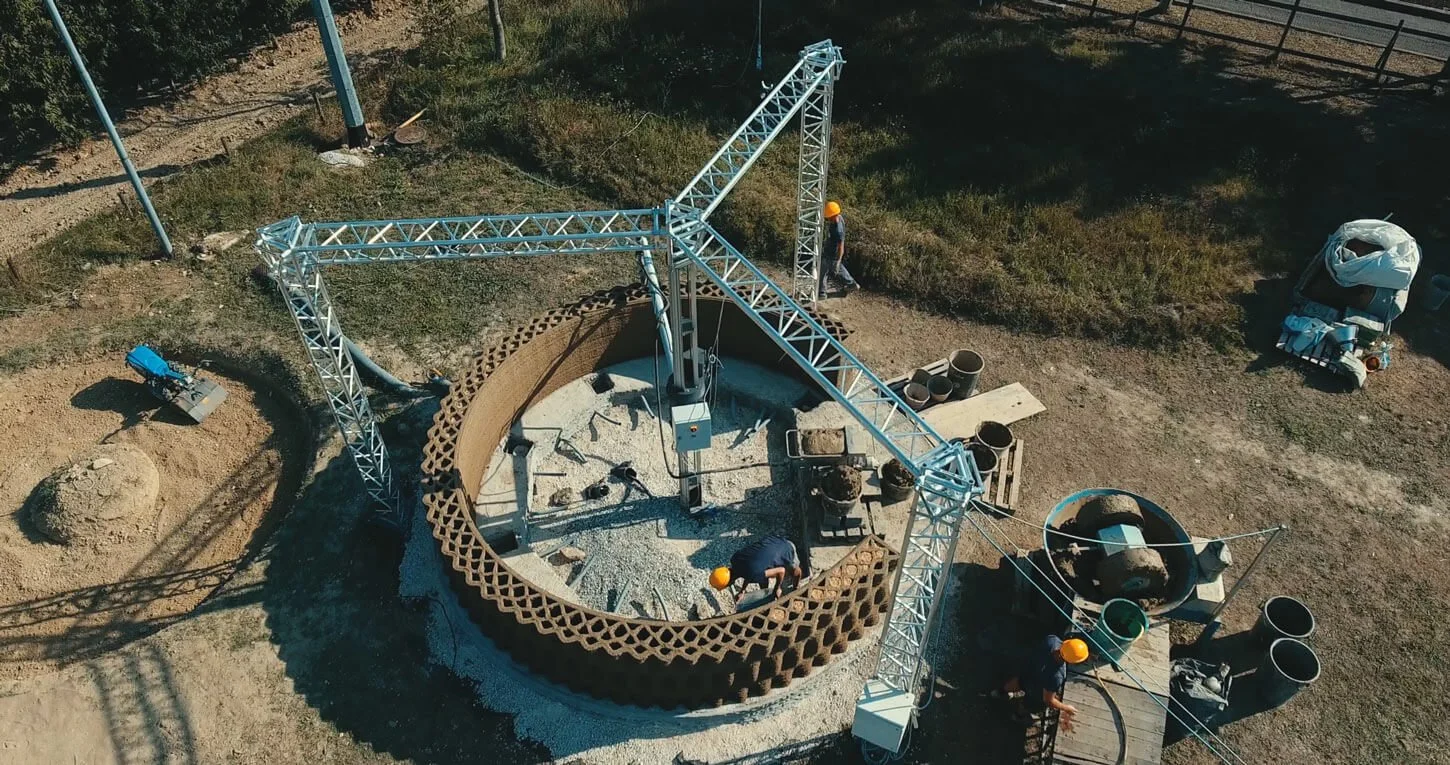
The Challenges of Construction Sector
The construction sector is under pressure: climate change, housing shortages, rising costs, and a lack of skilled labour are all driving the need for smarter, more sustainable building methods.
One of the most promising innovations is 3D concrete printing (3DCP), which can reduce waste, speed up construction, and enable complex architectural designs.
3D concrete printing (3DCP) still faces key challenges, including limited automation, lack of real-time monitoring, high energy use, and poor integration across design and construction.
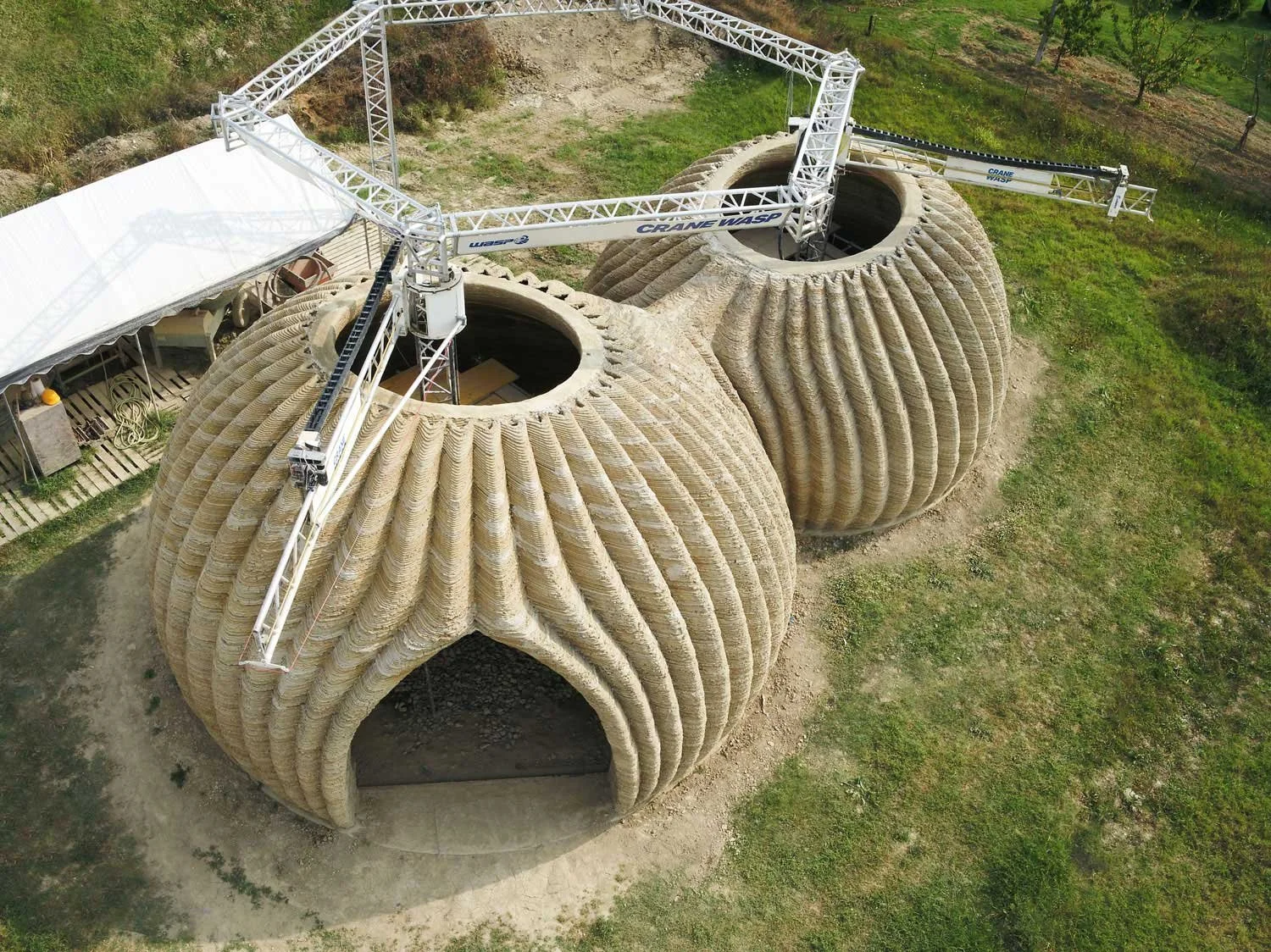
Our Vision and Mission
AM2PM (Additive to Predictive Manufacturing for Multistorey Construction Using Learning by Printing and Networked Robotics) is on a mission to redesign construction using robotics, artificial intelligence (AI), and smart digital tools.
Our goal is to create fully integrated digital system that merges automation, real-time monitoring, AI-driven decision-making, and sustainable material use.
Rather than relying on disconnected tools or isolated upgrades, AM2PM brings all aspects of modern construction together under one intelligent framework.
This new approach will help:

Predict and prevent issues before they occur

Reduce environmental impact through smarter material use

Speed up construction, while improving safety and lowering costs
As a European initiative, AM2PM supports key EU strategies like the Green Deal and New European Bauhaus. We aim to transform traditional construction sites into digitally connected, automated environments, enabling the efficient and sustainable construction of multi-storey buildings.
The impact?
Up to 50% less material use

29 million tons less embodied carbon

Over €11 billion in potential savings across Europe every year

Our 6 Key Objectives
AM2PM focuses on six main goals that work together to tackle today’s challenges and build the construction sites of tomorrow:






Concept
AM2PM is revolutionising construction by merging 3D concrete printing, AI, robotics, and digital design into a single intelligent system.
The goal is to make construction more efficient, sustainable, and data-driven.


At the core of the project is a Digital Twin platform that connects all stages of the construction process—from material development to real-time monitoring and on-site automation.

This creates a cyber-physical construction system that addresses key industry challenges such as environmental impact, labour shortages, and the growing need for digitisation.
AM2PM focuses on three interconnected pillars:
Predictive AI platform that uses sensors and simulation to monitor, evaluate, and improve construction processes


Material synthesis using recycled and low-impact cementitious mixes
Multi-agent human-robot collaboration systems to optimise structural design

How Our Innovations Make a Real Impact
Help architects and designers choose smarter materials
Enable real-time decisions using live data
Cut emissions and reduce material waste
Improve safety and efficiency on robotic sites
Provide a real-world “Living Lab” for testing solutions

Our Research Method
Our approach follows an interative design process that continuously improves and adapts.
The journey includes:
Treatment Evaluation
Assess the results and feed
Treatment Validation
Test whether the solutions work.
Problem Investigation
Understand what needs fixing and why.
Treatment Design
Develop ideas and technologies to solve those problems.

This cycle connects material science, AI tools, and structural design into one integrated method, helping us build smarter at every step.
Consortium
Supported by leading universities, research institutions, and industry partners across Europe, AM2PM is turning advanced research into practical solutions for the future of construction.


