
AM2PM brings additive manufacturing research to EC³ 2026
AM2PM research on connecting decentralised additive manufacturing workflows was presented at the 2026 European Conference on Computing in Construction (EC³ 2026) in Corfu, Greece.
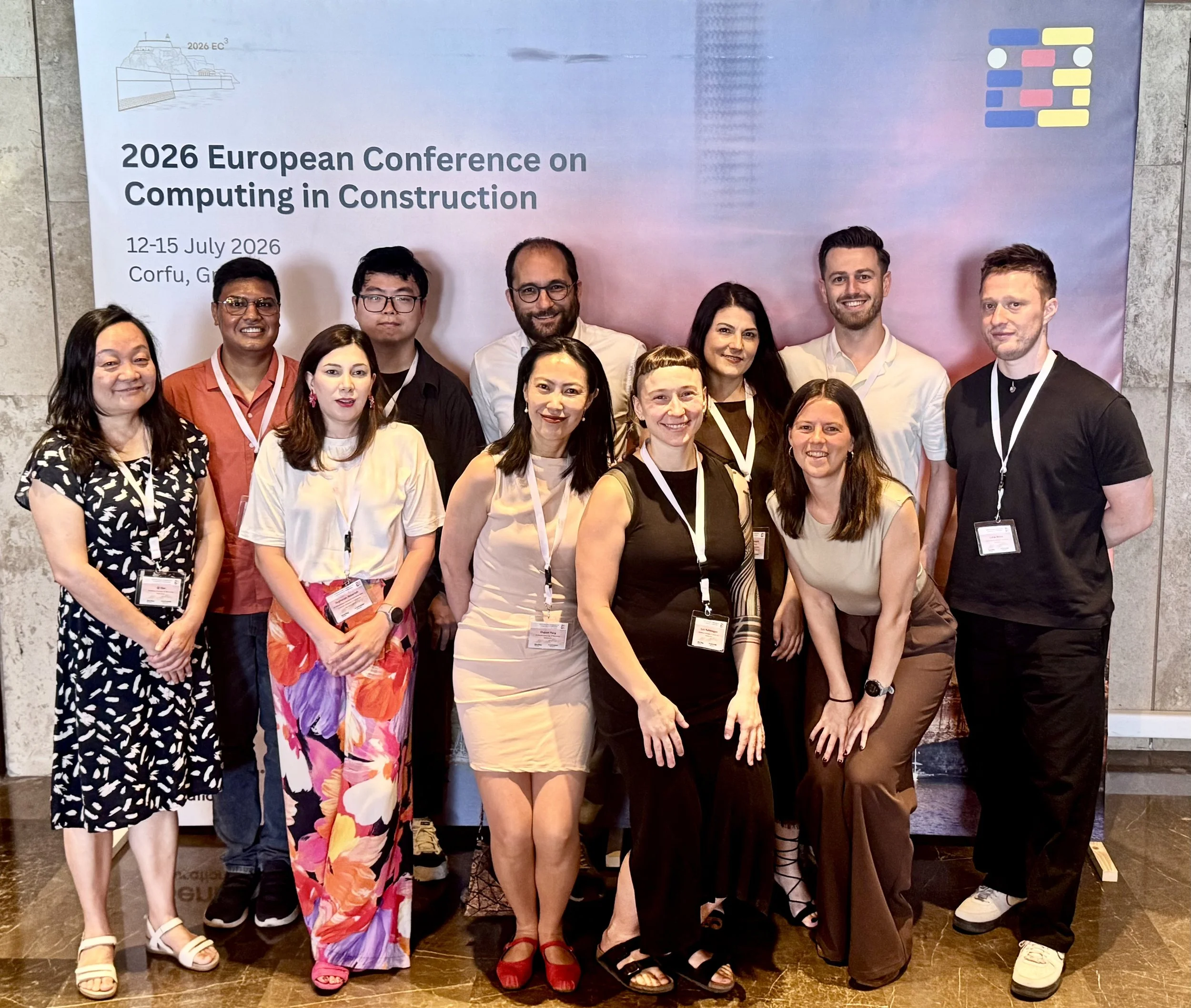
Held from 12–15 July 2026, the European Conference on Computing in Construction (EC³ 2026) brought together the international research community working at the intersection of computing and the built environment. This year’s programme covered a broad range of topics including artificial intelligence, automation and robotics, decentralised data, and sustainability.
Lukas Kirner from Eindhoven University of Technology (TU/e) presented AM2PM research developed together with Alex Donkers and Ekaterina Petrova. Their work, “Towards a Multi-Domain Semantic Architecture for Graph-Based Orchestration of Decentralised Additive Manufacturing”, was also published in the EC³ 2026 proceedings.
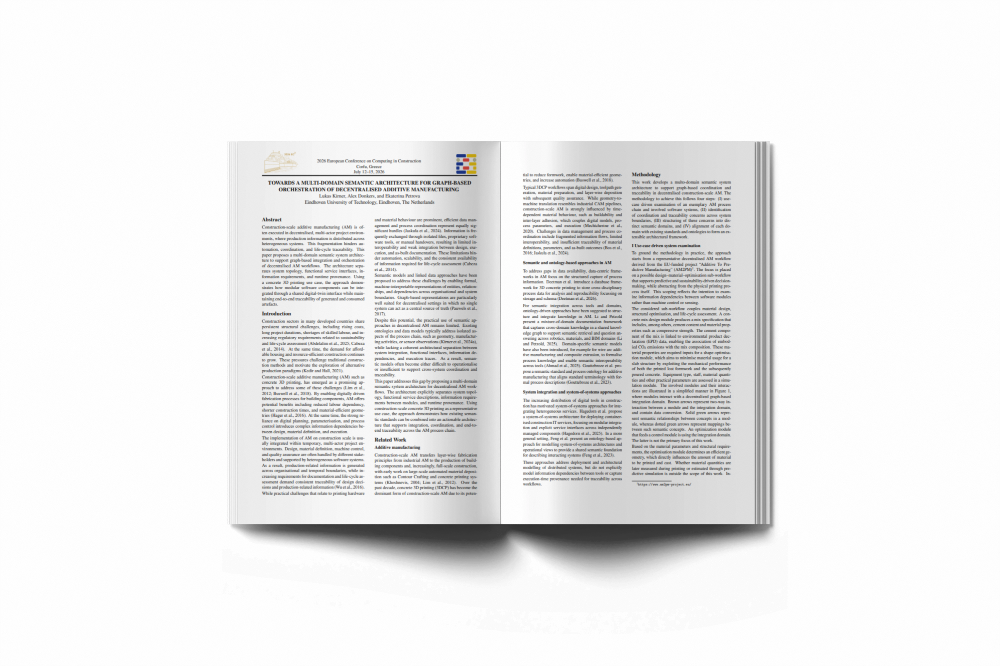
The presentation focused on the challenge of coordinating decentralised additive manufacturing workflows, where multiple stakeholders and heterogeneous software systems exchange information across organisational boundaries. Limited interoperability and hidden information dependencies can make these workflows difficult to coordinate and trace.
To address this, the research proposes a multi-domain semantic architecture that separates and connects information about system structure, functional interfaces, information requirements and execution history. The approach was demonstrated through a concrete 3D-printing use case, where software components were integrated through a shared Digital Twin interface, supporting workflow coordination and end-to-end traceability.
AM2PM was also represented in the organisation of the conference. Ekaterina Petrova, Assistant Professor of AI in Construction at TU/e and leader of AM2PM’s WP4 on multiscale integration, served as Conference Chair of EC³ 2026.
Participation in EC³ 2026 provided an opportunity to share AM2PM’s research with the wider computing-in-construction community and connect it with ongoing developments in digital and automated construction.